
This report is a comprehensive, 360° view of election chain of custody as it exists today in law, in practice, and in the public domain. Advance Elections, Verified Voting, and the Election Law Program contributed different areas of expertise to answer the same urgent question: how do election officials protect the vote, and how can safeguarding the chain of custody help build trust in our elections?
Executive Summary:
Every state and local election jurisdiction in the country is committed to the security of its ballots and the integrity of its elections. The ways states pursue that commitment, however, vary widely, shaped by differences in statute, administrative structure, geography, resources, and history. A practice written into one state’s election code may live in another state’s procedures manual, and in a third may be a matter of long-standing local policy adopted under delegated authority. That variation is normal. It is not evidence that any jurisdiction is falling short, and readers should resist the temptation to treat differences in approach, or gaps in publicly available documentation, as gaps in security.
At its core, chain of custody is the documented, unbroken record of who had control of every ballot and every piece of voting equipment, from the moment each is created until it is securely archived. It is how election officials turn the work they already do into proof the public can verify.
The offices best positioned for today’s scrutiny treat custody as a year-round discipline. They review their systems on a regular schedule, not only after something goes wrong, and they talk about the process in plain language before they are asked to. This report is offered in that spirit. It is not as a standard against which any office should be measured, but as a resource every office can draw from, wherever it is starting. We offer it with great respect for the professionals who do this work every day, and confidence that the story of the election chain of custody in America is one of commitment, care, and continuous improvement.
How to use this report:
This is a resource for continuous process improvement, not a scorecard or assessment tool. Election offices vary significantly in scale and capacity. We present recommendations in tiers so that any office, regardless of size or budget, can identify realistic, incremental improvements. Offices should use this guide to reflect on their own procedures, validate current strengths, and implement improvements suited to their specific authority and resources.
Key Report Sections:
The report is organized into three sections, each corresponding to one of the disciplines that shape how chain of custody works in practice: the law that frames it, the operational practices that carry it out, and the communication that makes it visible to the public. Read together, they move from the rules on the books, to the procedures in the office, to the conversation with voters. This is the same path a ballot’s story travels from statute to public trust. Each section stands on its own, so an office can turn to whichever speaks to its most pressing need, but the three are designed to reinforce one another.
A Partnership Built for a 360° View:
This report is the product of a unique collaboration among three organizations, each contributing a distinct pillar of expertise: the Election Law Program, which conducted the legal research surveying the statutes, regulations, and case law that govern chain of custody across the states; Advance Elections, which developed the best practices framework drawing on the operational experience of election administrators; and Verified Voting, which built the communications guidance for bringing the public into the process. Together, these three pillars provide something none could alone: a comprehensive, 360° view of election chain of custody as it exists today in law, in practice, and in the public domain.
About the Organizations
Advance Elections
Advance Elections is a nonpartisan, mission-driven consulting firm. With over 40 years of combined experience in elections and public service, Advance Elections is dedicated to strengthening the infrastructure, resilience, and trust that underpin American elections.
Verified Voting
Verified Voting is a nonpartisan nonprofit whose mission is to strengthen democracy for all voters by promoting the responsible use of technology in elections. Verified Voting works with election officials, policymakers, and democracy defenders across party lines to help voters vote and to promote policies that support justified public confidence in elections.
The Election Law Program
The Election Law Program (ELP) is a nonpartisan organization created as a joint venture of the National Center for State Courts and William & Mary Law School to provide practical assistance to state court judges called upon to resolve difficult election law disputes. The ELP seeks to illuminate and clarify the intersection of the law and elections, working to bridge the knowledge gap between election officials, practitioners, and the judges that oversee election litigation.
Authors:
James Alcorn, Senior Director, Election Law Program
Mitch Bozarth, Program Manager, Election Law Program
Corrie Emerson, Communications Director, Verified Voting
Rebecca Green, Co-Director, Election Law Program
Chris Piper, Principal & Co-Founder, Advance Elections
Pamela Smith, President & CEO, Verified Voting
Social Media Toolkit:
Download the graphics or customize on Canva for your office’s use!
Dimensions | 1080 x 1080
Graphic 1
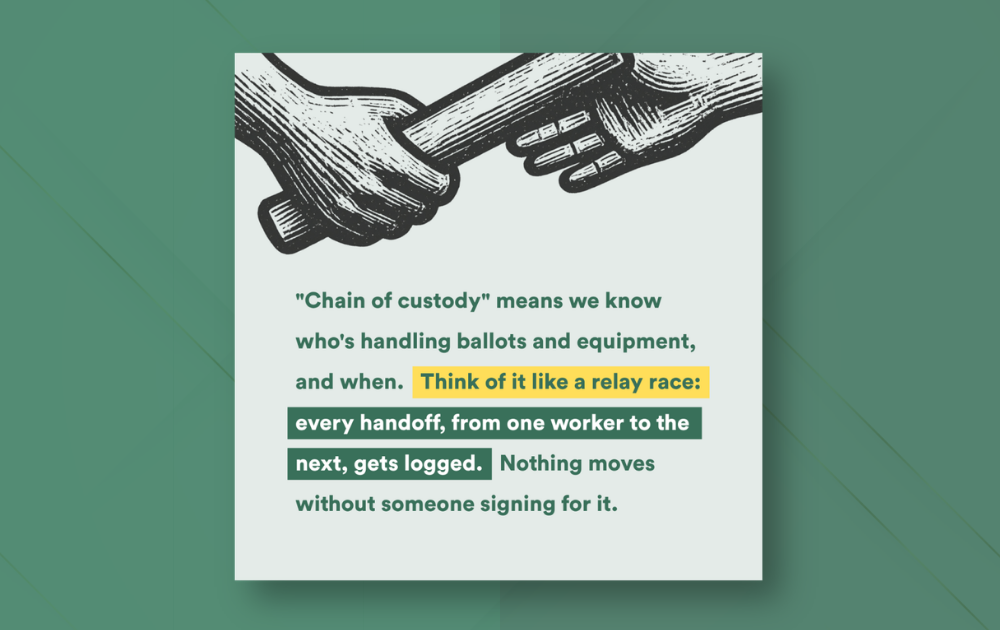
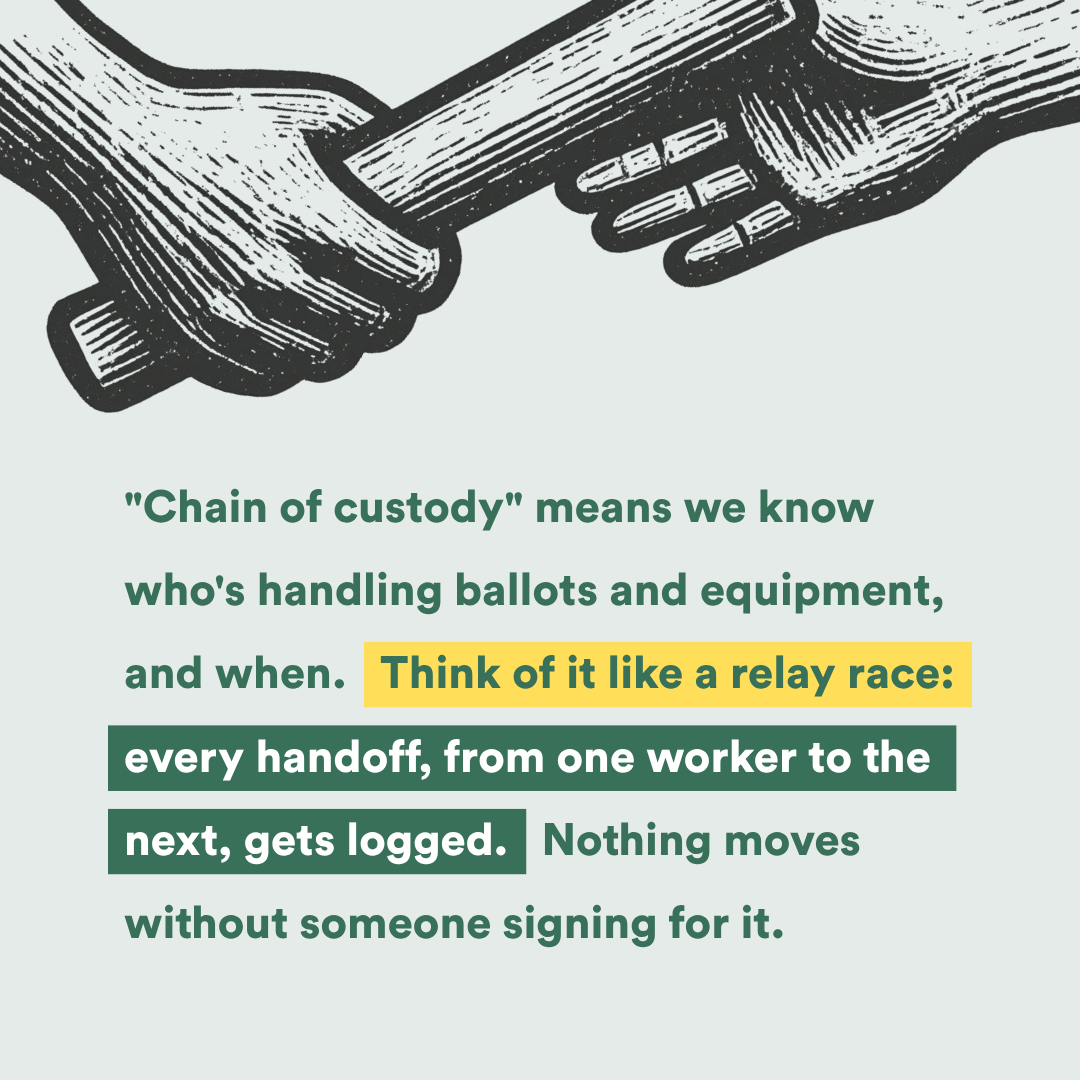
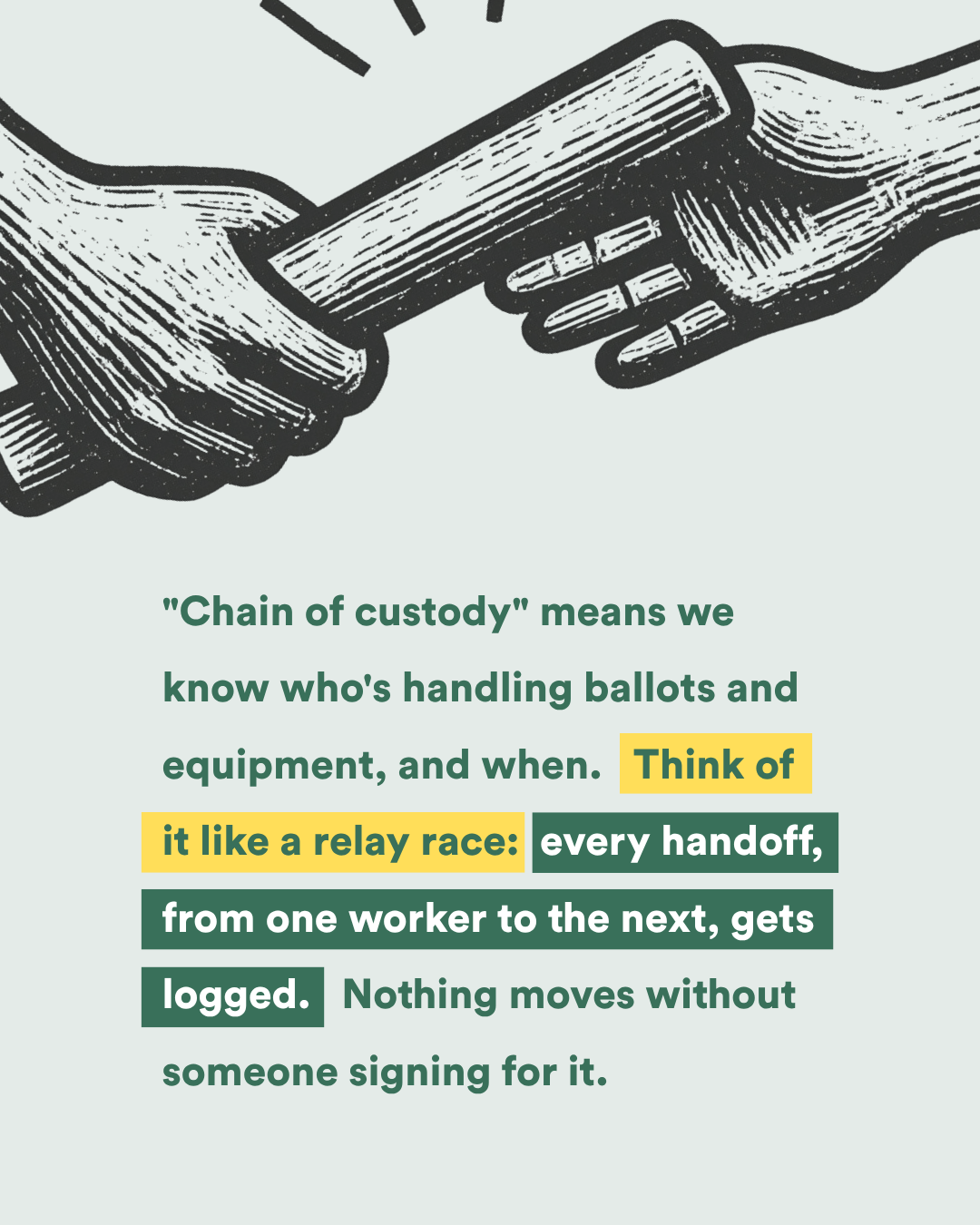
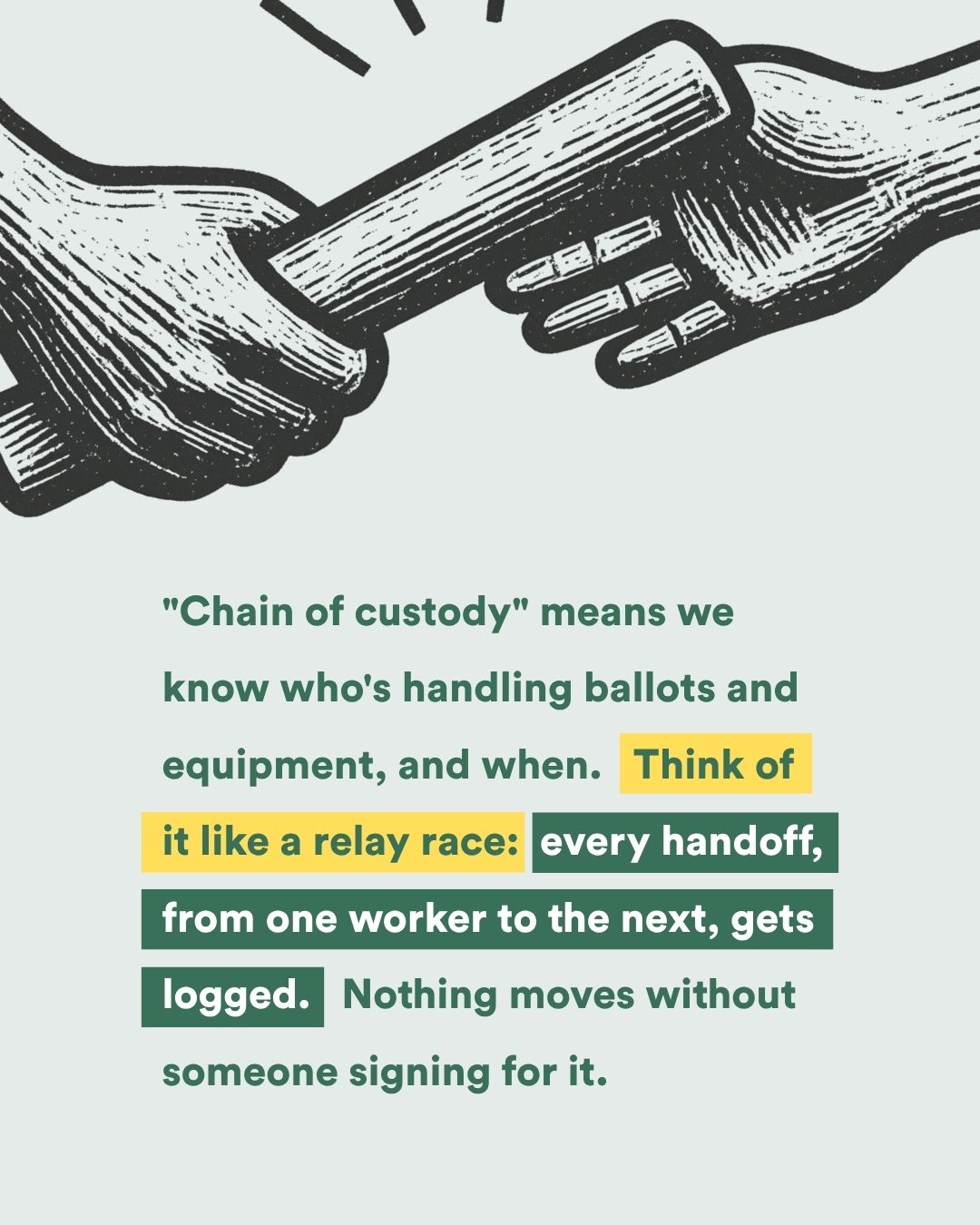
“Chain of custody” means we know who’s handling ballots and equipment, and when. Think of it like a relay race: every handoff, from one worker to the next, gets logged. Nothing moves without someone signing for it.
 Download |
Graphic 2
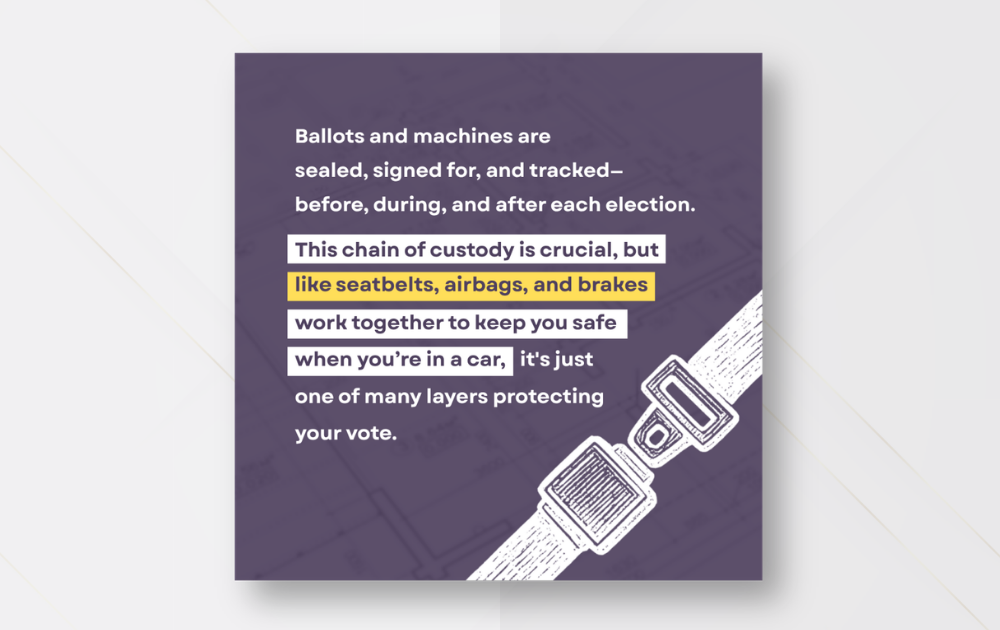
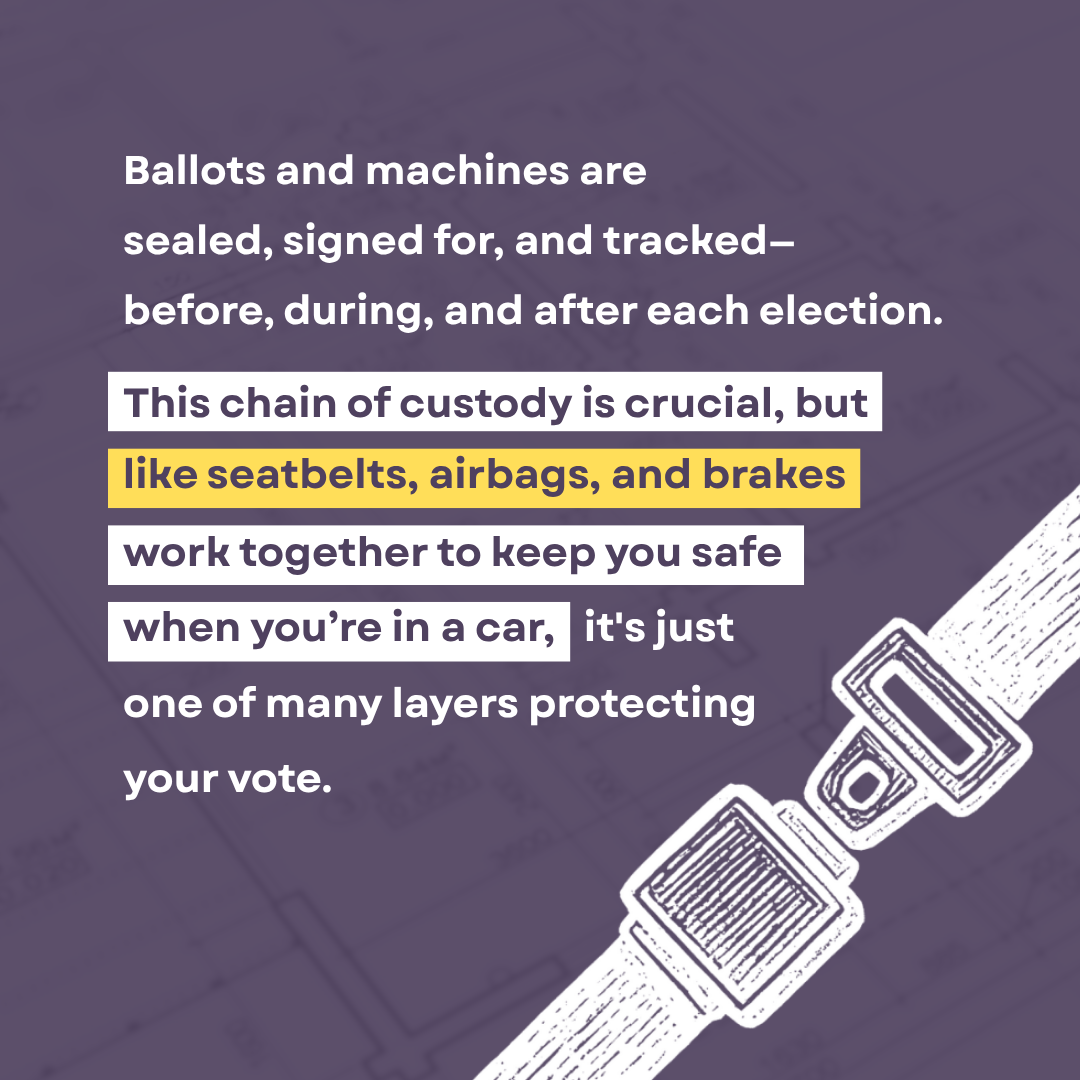
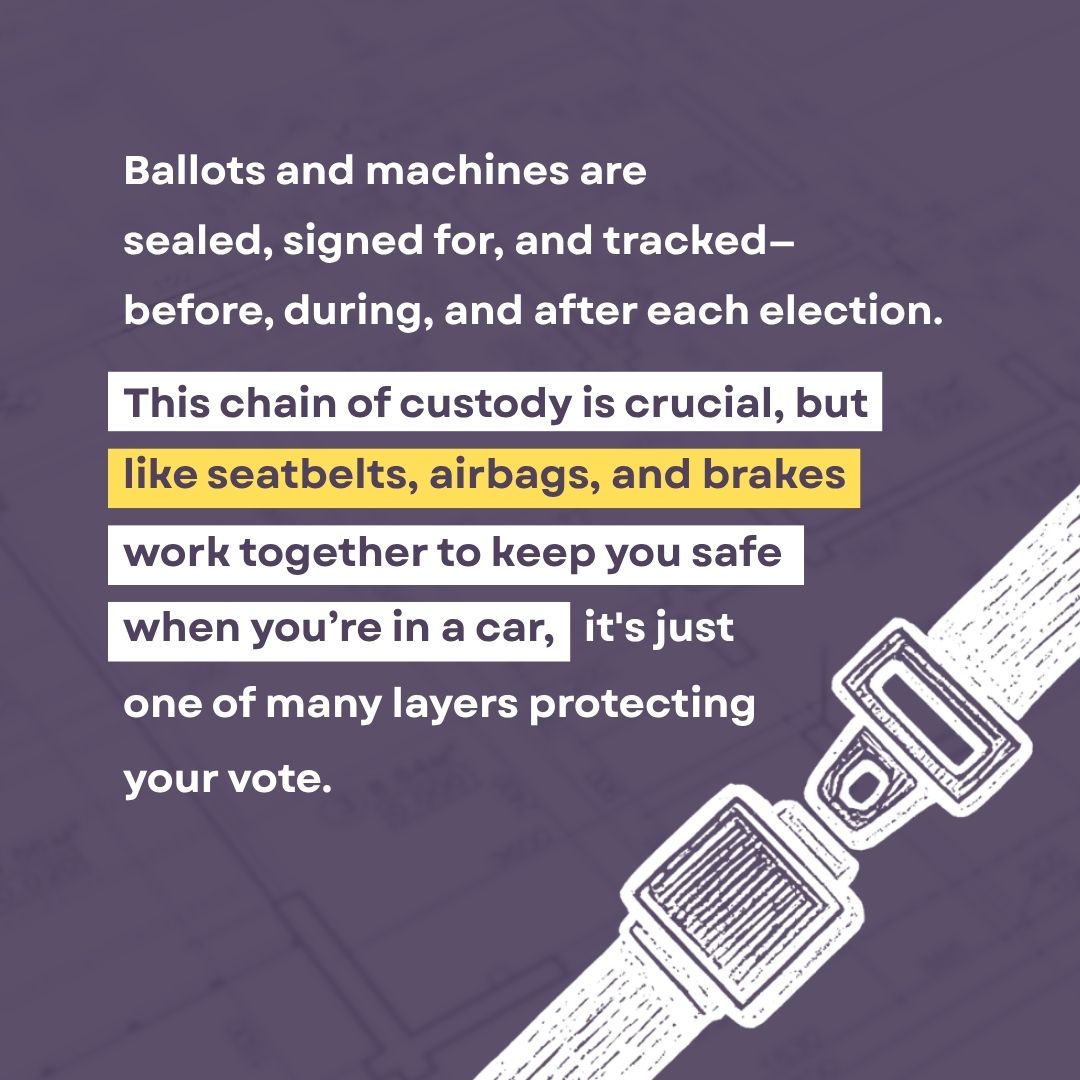
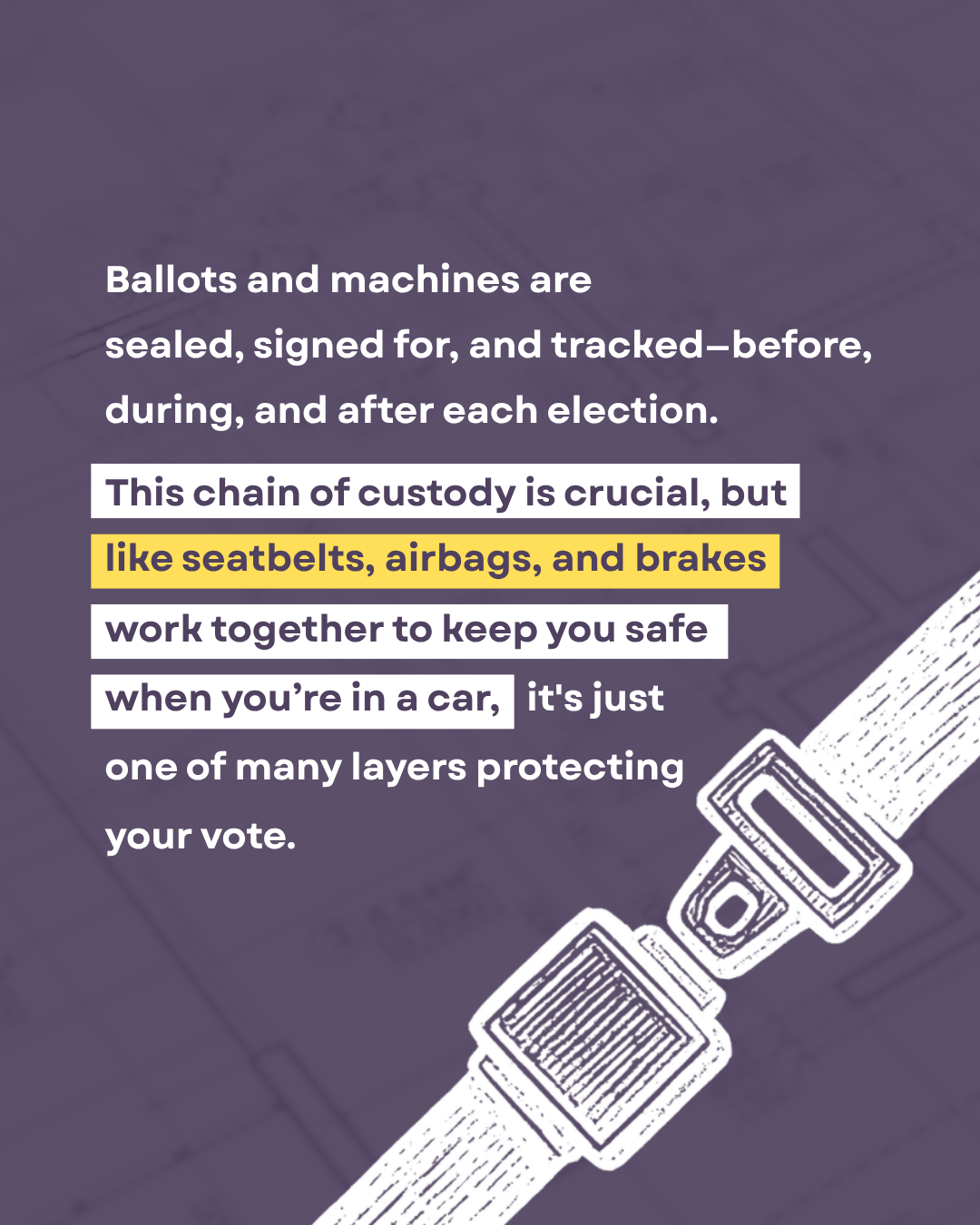
Ballots and machines are sealed, signed for, and tracked—before, during, and after each election. This chain of custody is crucial, but like seatbelts, airbags, and brakes work together to keep you safe when you’re in a car, it’s just one of many layers protecting your vote.
Graphic 3
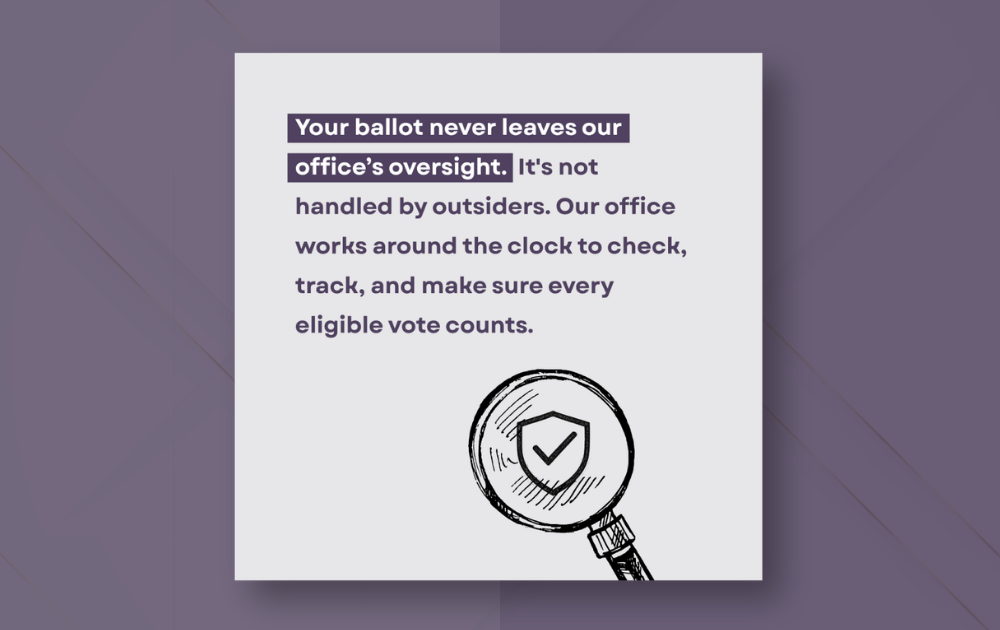
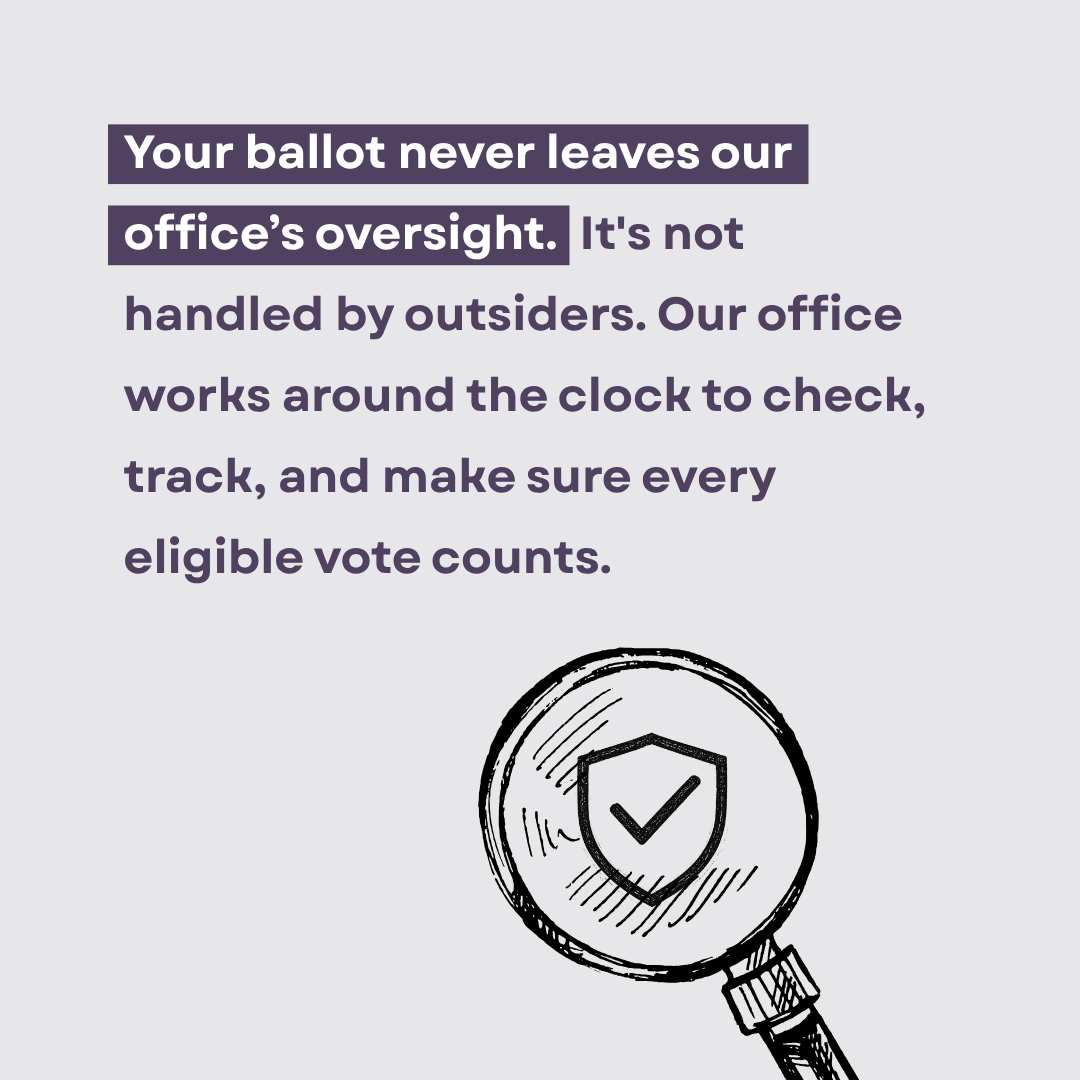
Your ballot never leaves our office’s oversight. It’s not handled by outsiders. Our office works around the clock to check, track, and make sure every eligible vote counts.
Graphic 4
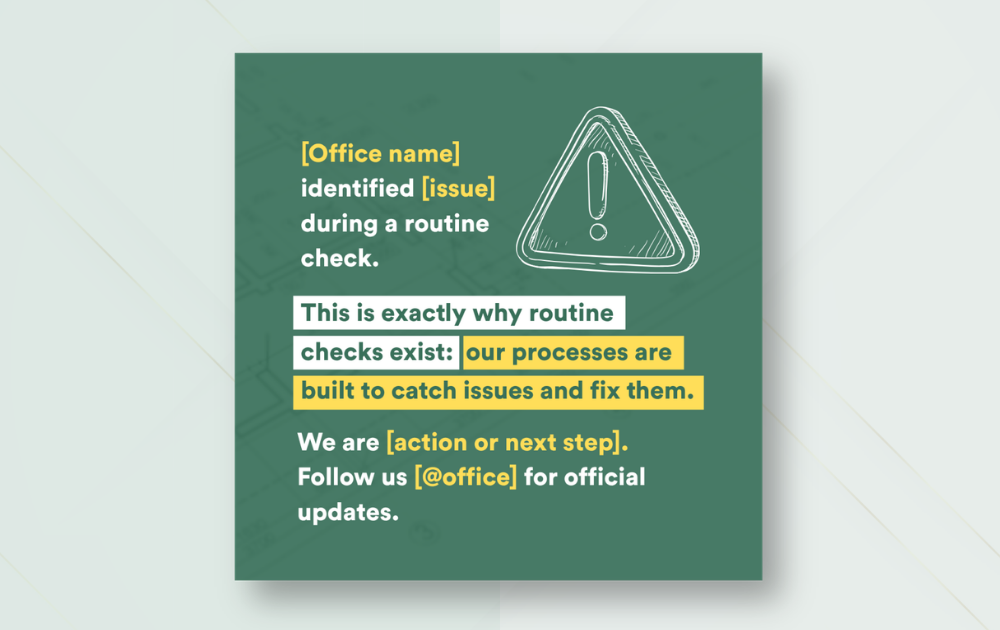
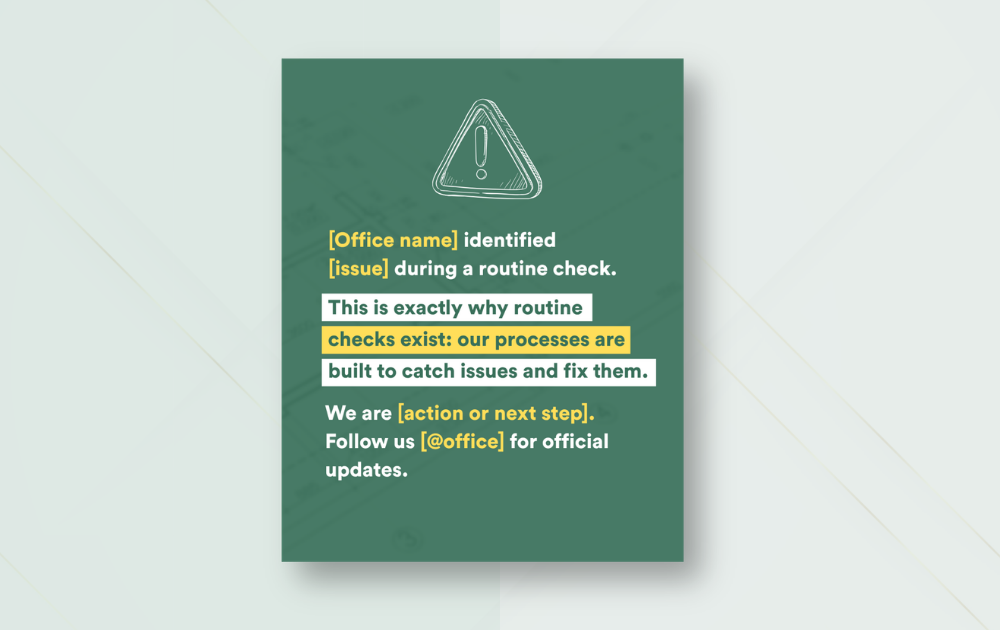
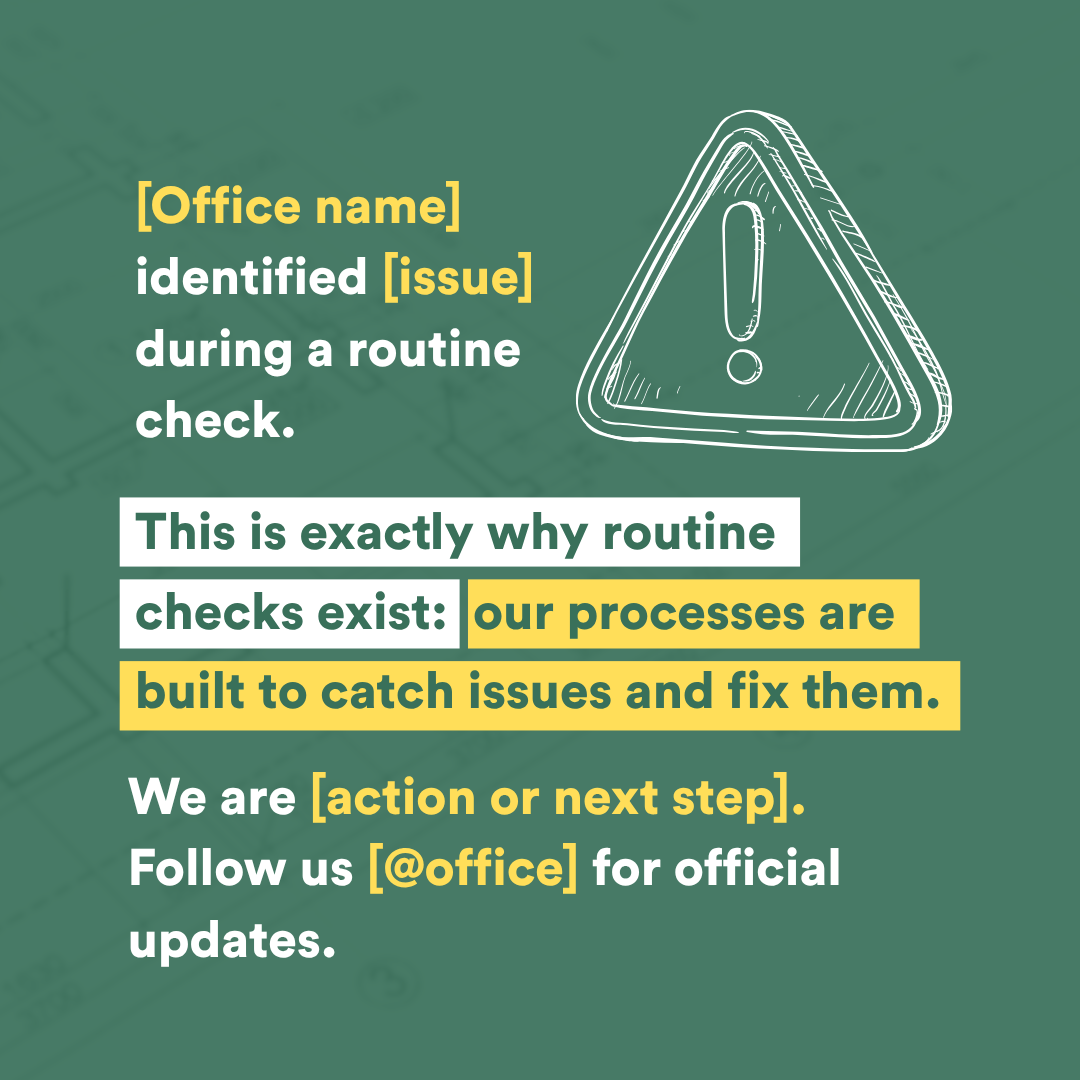
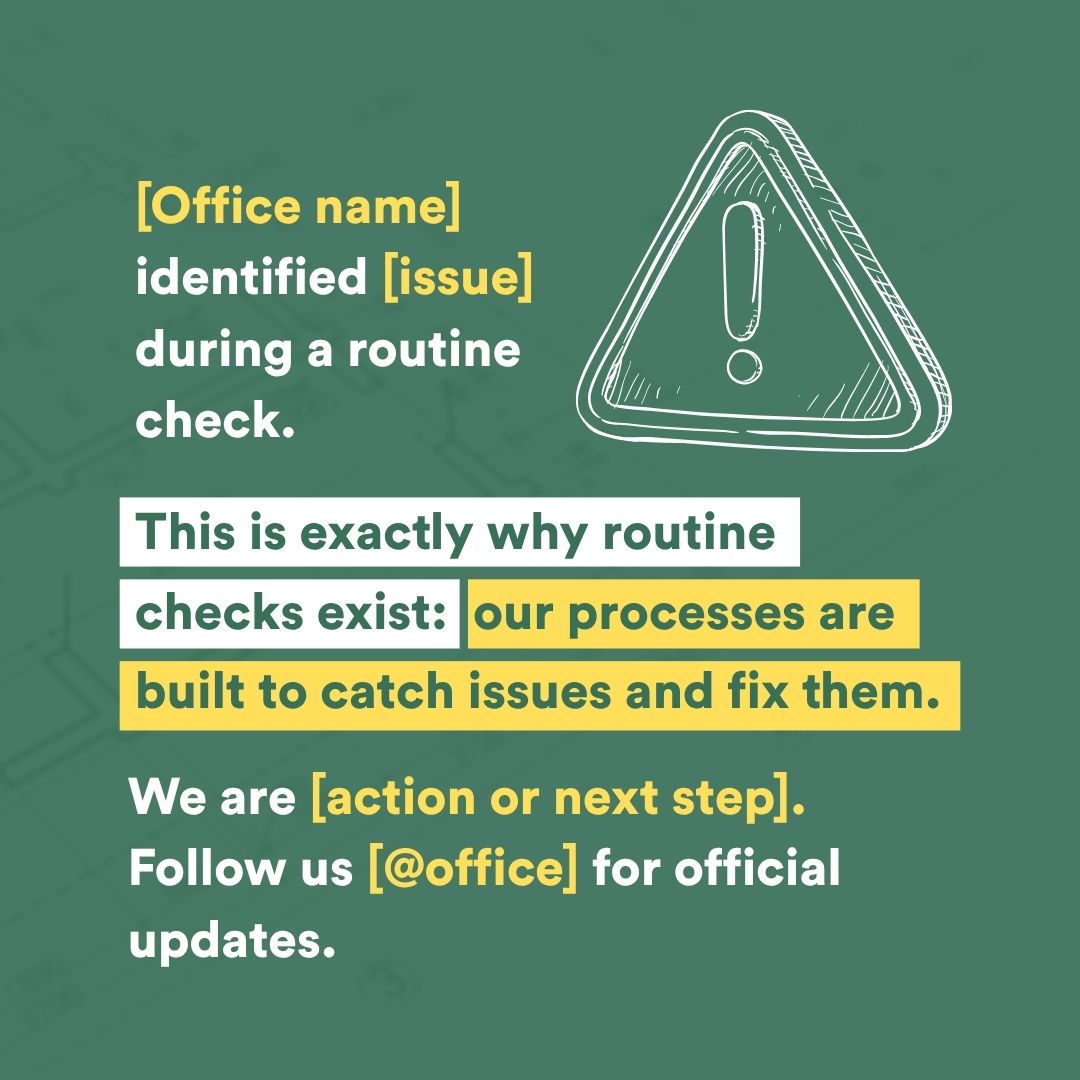
[Office name] identified [issue] during a routine check. This is exactly why routine checks exist: our processes are built to catch issues and fix them. We are [action or next step]. Follow us [@office] for official updates.
Dimensions | 1080 x 1350
Graphic 1
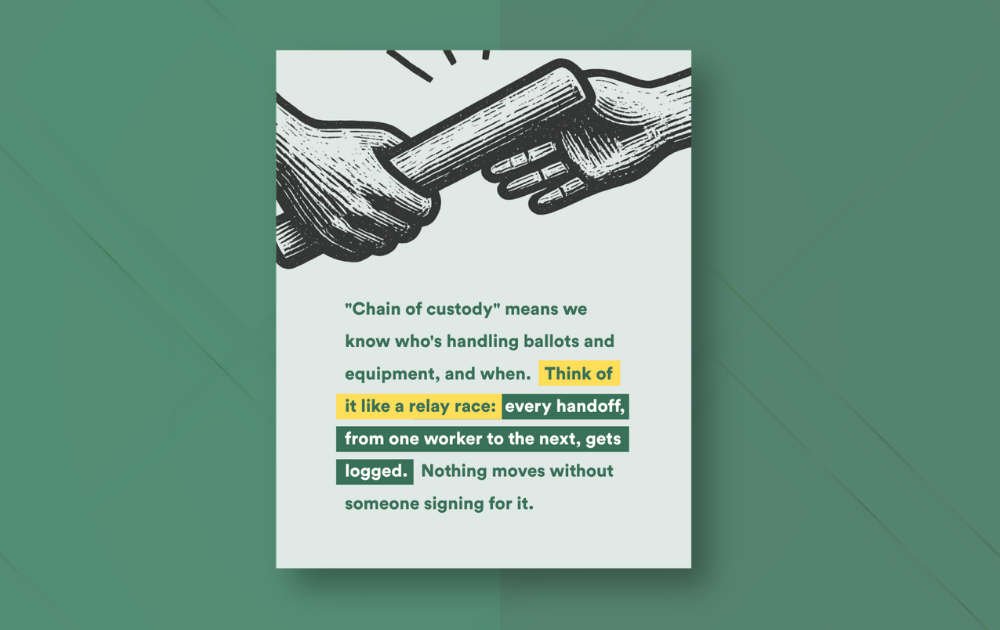
“Chain of custody” means we know who’s handling ballots and equipment, and when. Think of it like a relay race: every handoff, from one worker to the next, gets logged. Nothing moves without someone signing for it.
Graphic 2
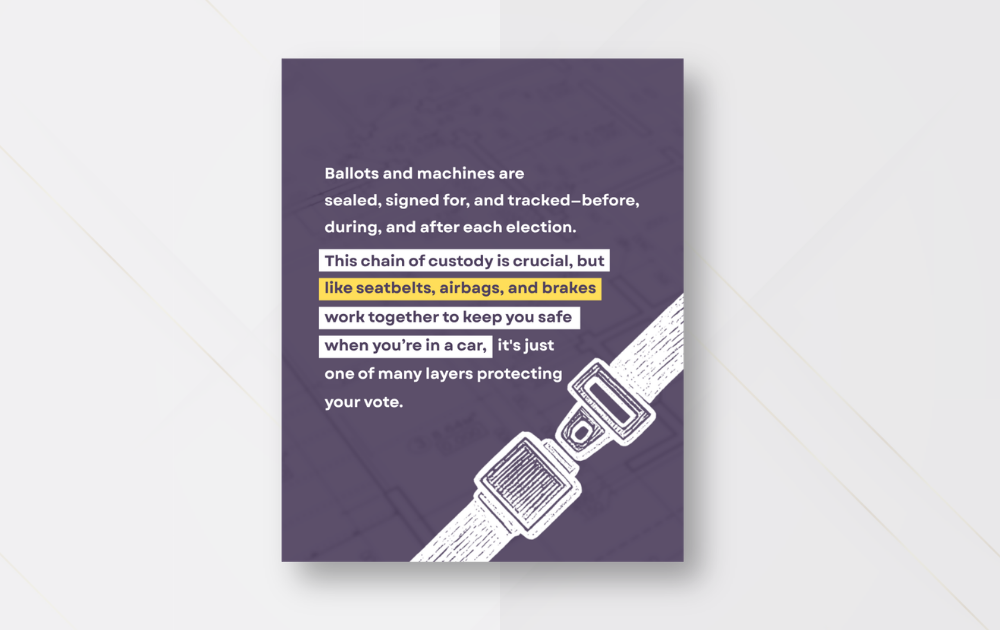
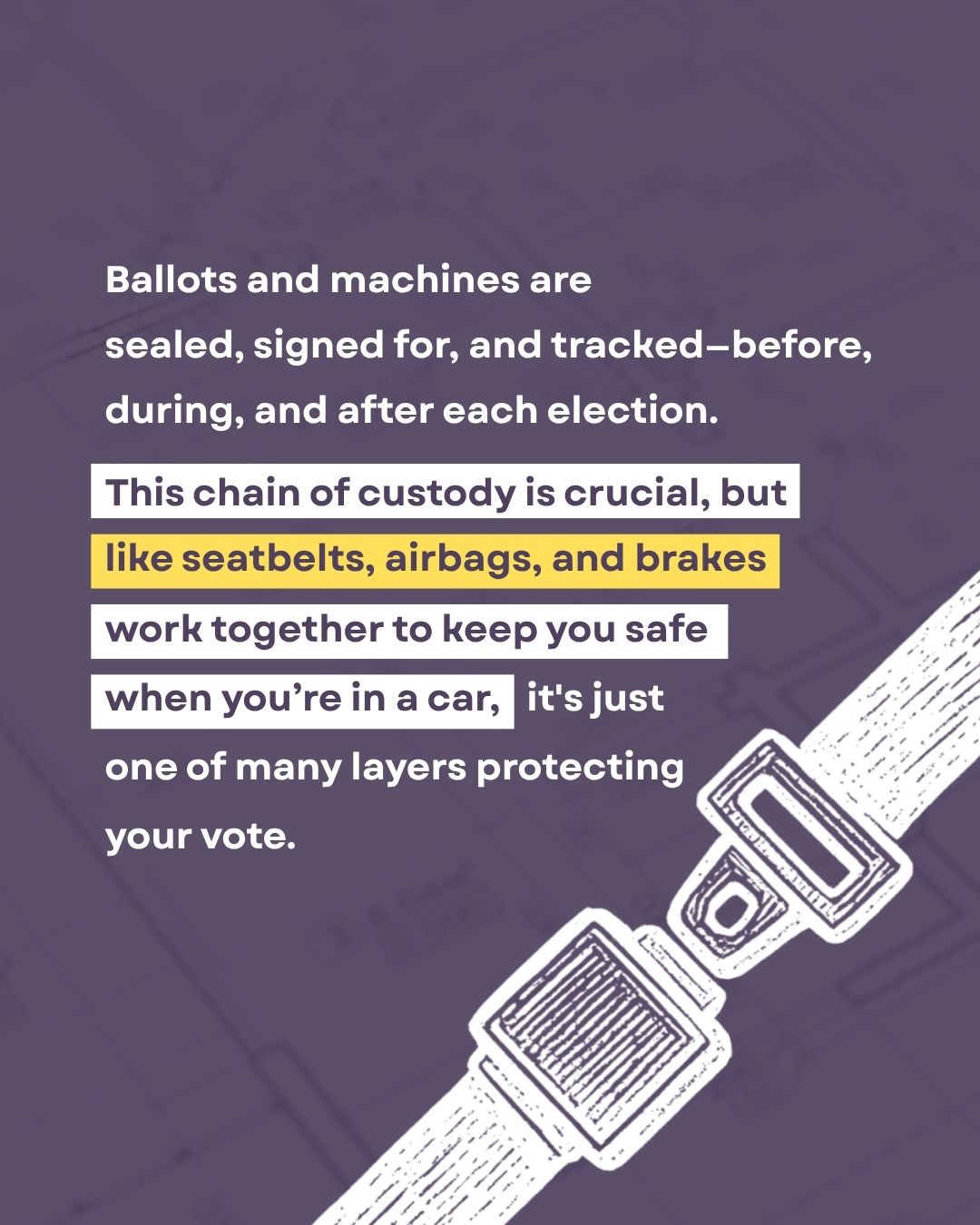
Ballots and machines are sealed, signed for, and tracked—before, during, and after each election. This chain of custody is crucial, but like seatbelts, airbags, and brakes work together to keep you safe when you’re in a car, it’s just one of many layers protecting your vote.
Graphic 3
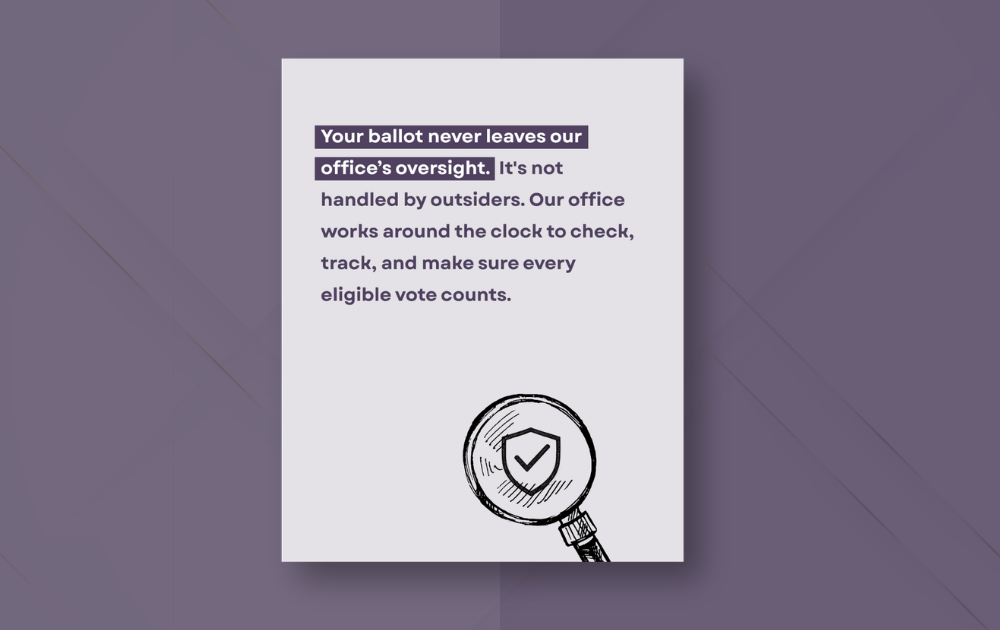
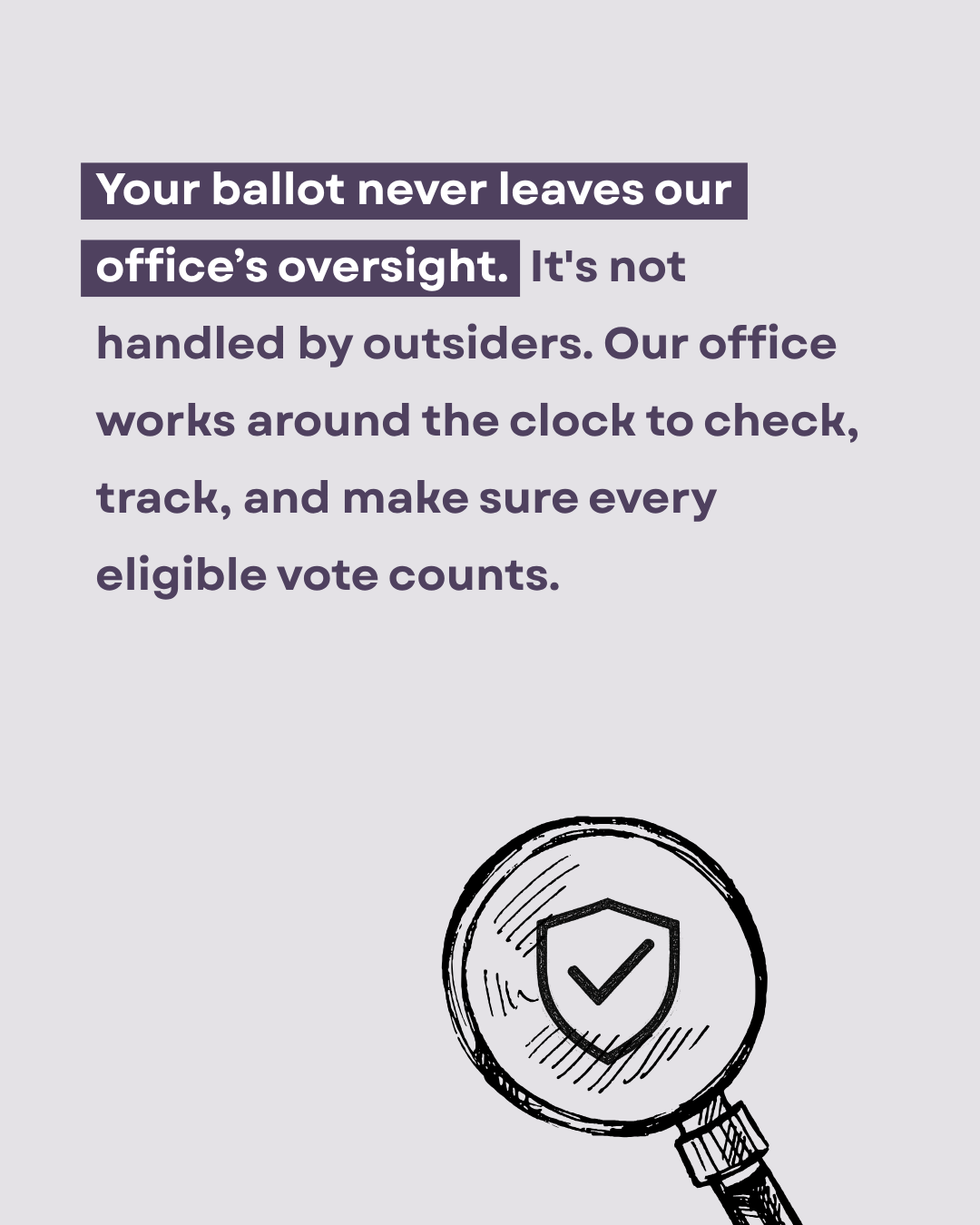
Your ballot never leaves our office’s oversight. It’s not handled by outsiders. Our office works around the clock to check, track, and make sure every eligible vote counts.
Graphic 4
[Office name] identified [issue] during a routine check. This is exactly why routine checks exist: our processes are built to catch issues and fix them. We are [action or next step]. Follow us [@office] for official updates.